
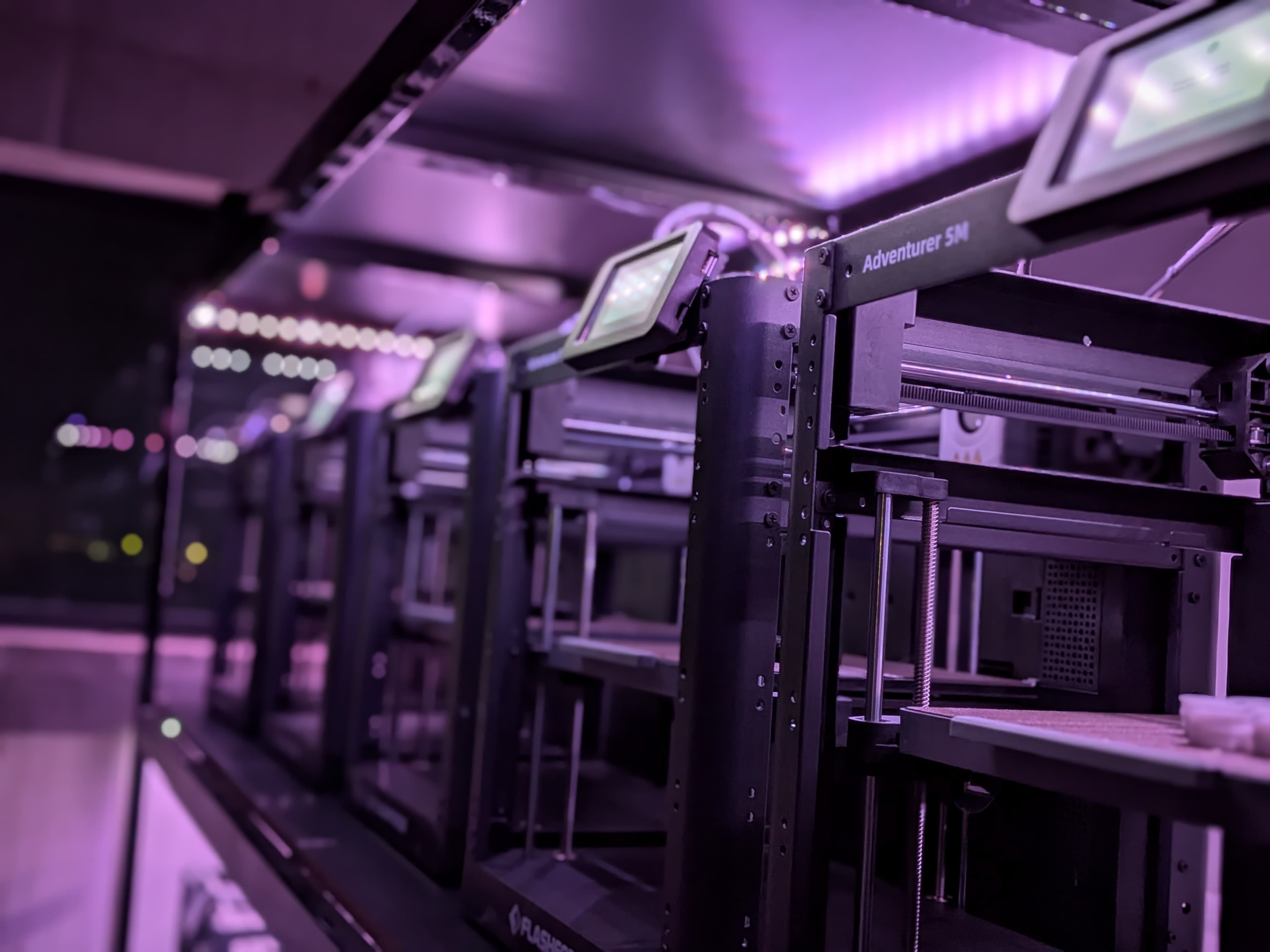
PLA, PETG or TPU? What we print on the farm in Cuauhtémoc
Chihuahua summer does not care about your datasheet.
A part that sits on a dashboard, next to a motor, or in a shop with no A/C will see temperatures that melt cheap PLA and turn a “good enough” clip into a warped scrap. At Inno Print Farm we print every day in Cuauhtémoc. This is the short version of how we pick filament for real jobs — not lab samples.
If you already have an STL, upload it, pick the material, and get a quote. If you are still deciding, use this.
Start with the job, not the color
Ask three questions before you open the slicer:
Heat. Will it sit in a cab, near a compressor, or in a window?
Load. Does it hold weight, take a snap-fit, or just look good on a shelf?
Abuse. Dust, oil, sun, flex, drop?
Color comes last. Strength and temperature first.
PLA — fast, cheap, not for the sun
Use it when: indoor prototypes, display models, jigs that live in an office or a cool shop, one-off fits you will reprint next week.
Skip it when: the part lives in a vehicle, outside, or next to anything that gets hot. PLA softens around 55–60 °C. In July in Cuauhtémoc that is not a rare day — that is Tuesday on a dark dashboard.
PLA is still the right first print for most people. It is cheap to iterate. Just do not pretend it is a production material for heat.
PETG — the default for parts that have to work
Use it when: machine guards, brackets, covers, cable clips, replacement knobs, fixtures that see oil or a little flex, anything that has to last more than a month in a real shop.
PETG is what we print most for local businesses. It handles Chihuahua heat better than PLA, bonds well layer-to-layer, and does not snap like brittle PLA when you drop it on concrete.
It is not magic. It can string. It can take moisture from the air if the spool sits open. We dry it when it needs drying. You should too if you print at home.
For most “I need this part so the machine runs tomorrow” jobs, PETG is the answer.
TPU — when the part has to bend and come back
Use it when: gaskets, bumpers, phone or tool grips, vibration isolators, belts, flexible hinges, anything that would crack in PETG.
TPU is slower and fussier. Nozzles clog if settings or filament are off. That is why a lot of hobby printers never finish a good TPU job. On the farm we run it on purpose: clean nozzle, right speed, dry filament.
If your “plastic part” is really a rubber part, say so in the order notes. Guessing TPU vs PETG from an STL alone is how you get a hard bumper that does nothing.
Quick pick
Situation
Material
Prototype, indoor, iterate fast
PLA
Bracket, cover, fixture, shop use
PETG
Heat + sun (cab, window, outdoor)
PETG (or ask us before you pick ABS)
Needs to flex, grip, or seal
TPU
Looks only, painted display
PLA
Small production run of the same part
PETG or TPU, same settings every machine
What we need from your file
Same as always:
Watertight STL (or STEP if you have it)
Real-world size — do not upload a 2 mm model and hope we scale it
Wall thickness that can actually print (thin flags and 0.4 mm walls fail)
Notes: heat, oil, outdoor, flex, color if it matters
We already wrote the full checklist here: How to Prepare your 3D Models for Professional 3D Printing.
Local, not two weeks on a truck
The point of a print farm in Cuauhtémoc is not “3D printing is cool.” It is this: a broken clip, a missing knob, or a one-off fixture should not stop a machine while you wait on an import.
Upload the file. Pick PLA, PETG, or TPU. If you are not sure, write the use case in the notes. We will tell you which one will survive the shop.
Get a quote